
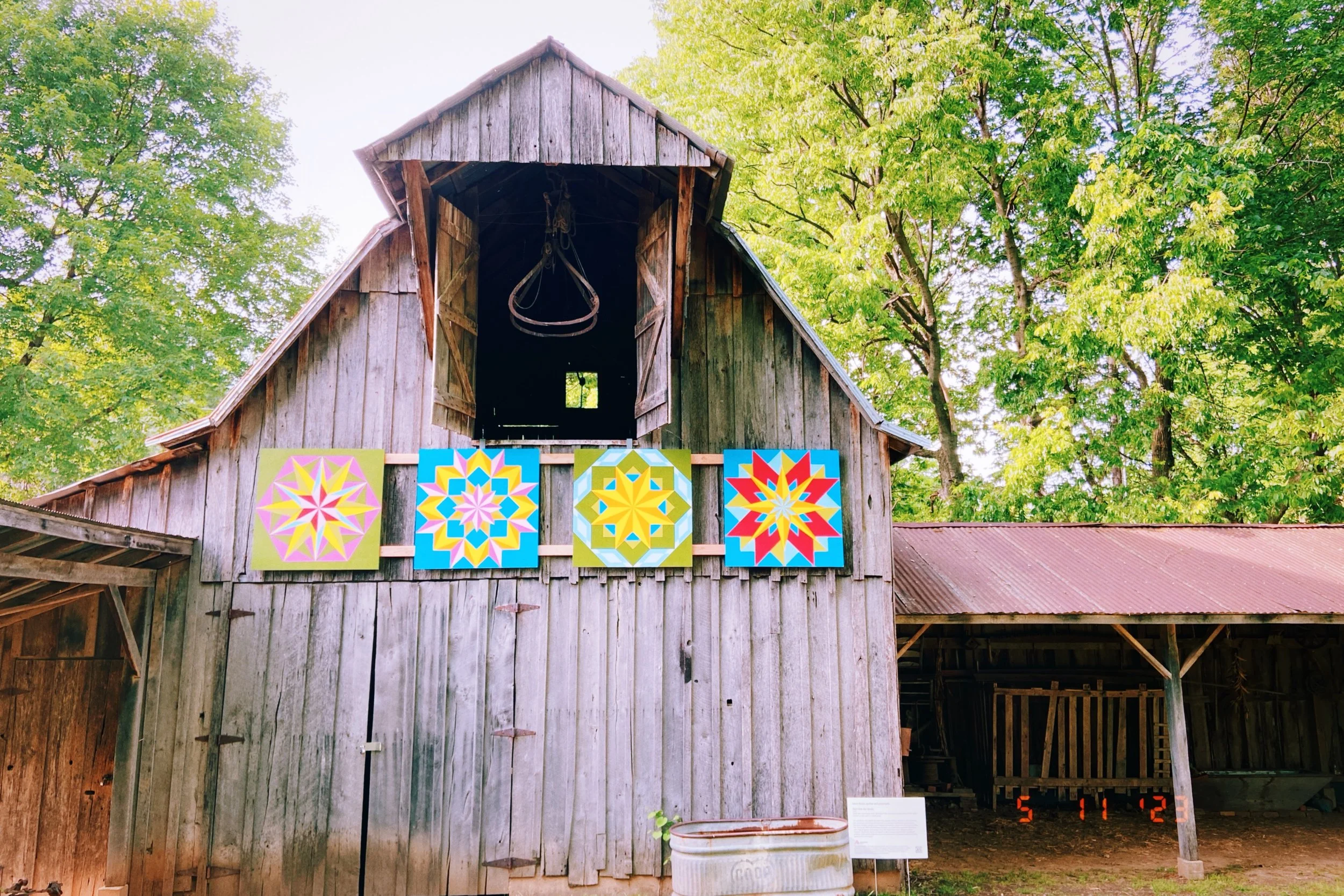
Arts One Presents expanded the traditional Barn Quilt concept to celebrate domestic crafts, identities, and communities reflected in Springdale’s intercultural landscape.
The project highlighted the skills and voices of traditional crafters and makers who may not be part of Northwest Arkansas’s mainstream art ecosystem, yet whose work plays a vital role in shaping the region’s rich and layered cultural tapestry.
The project drew inspiration from the Barn Quilt movement, a contemporary rural public art initiative that began in Appalachian Ohio. Traditionally, Barn Quilts feature 8-by-8-foot wooden panels painted with bold, geometric quilt block designs that carry family histories, regional identity, and symbolic meaning passed down through generations. Displayed on barns and homes and visible from the road, these works form informal open-air museums—often called Barn Quilt Trails—that invite exploration and connection. Participating artists register their panels with local Barn Quilt chapters, ensuring each work becomes part of an online registry for visitors to discover, visit, and appreciate.
The Artists
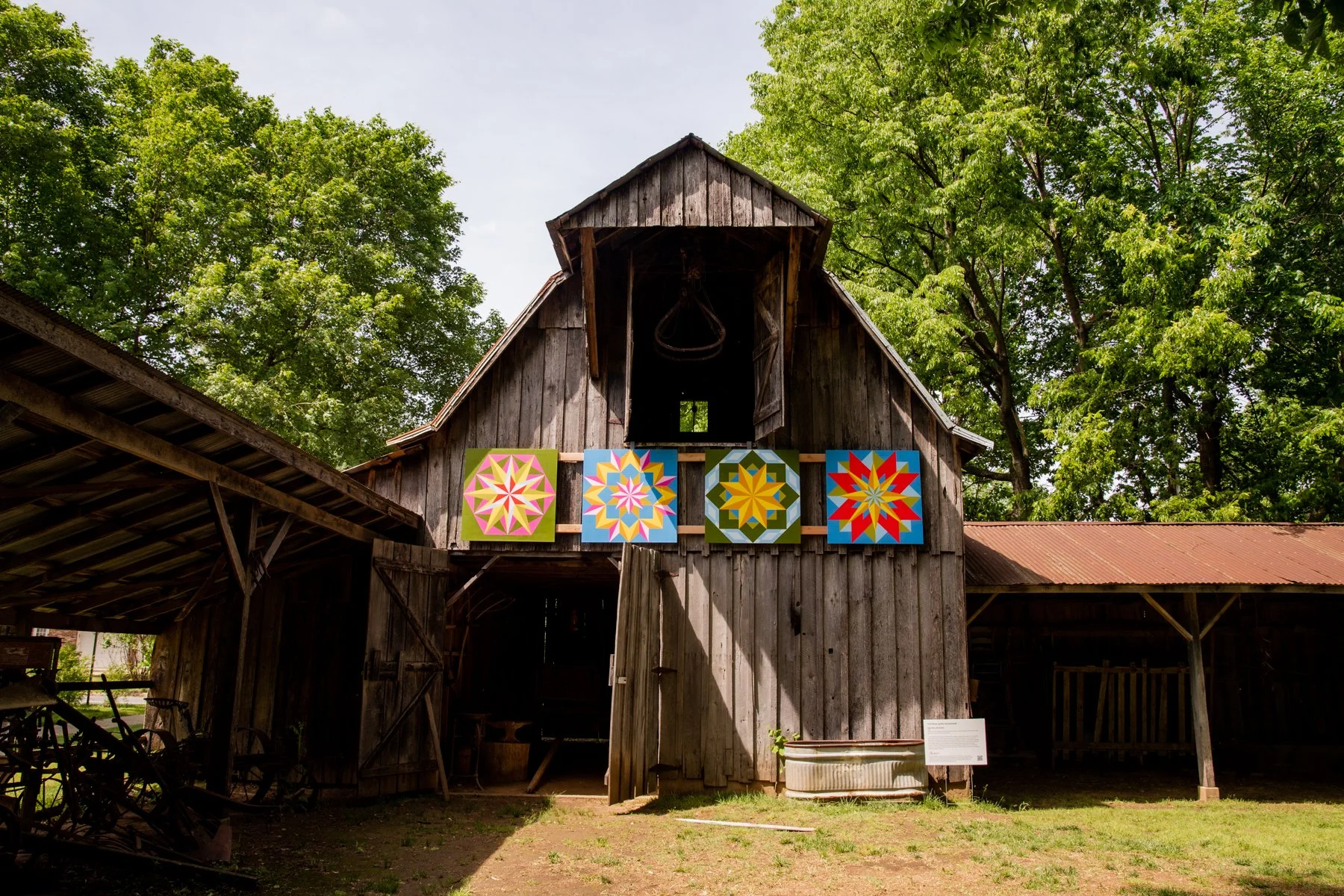
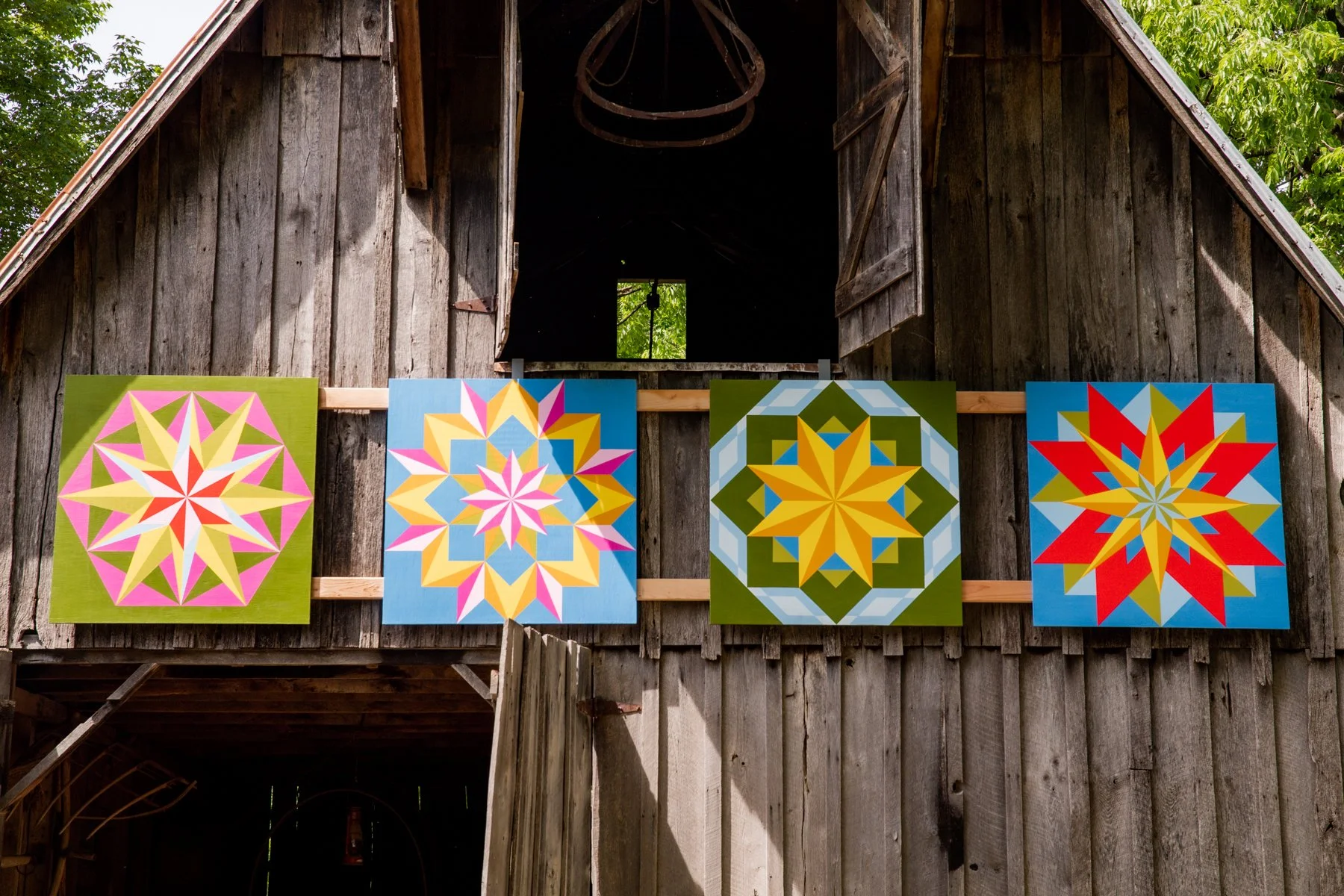
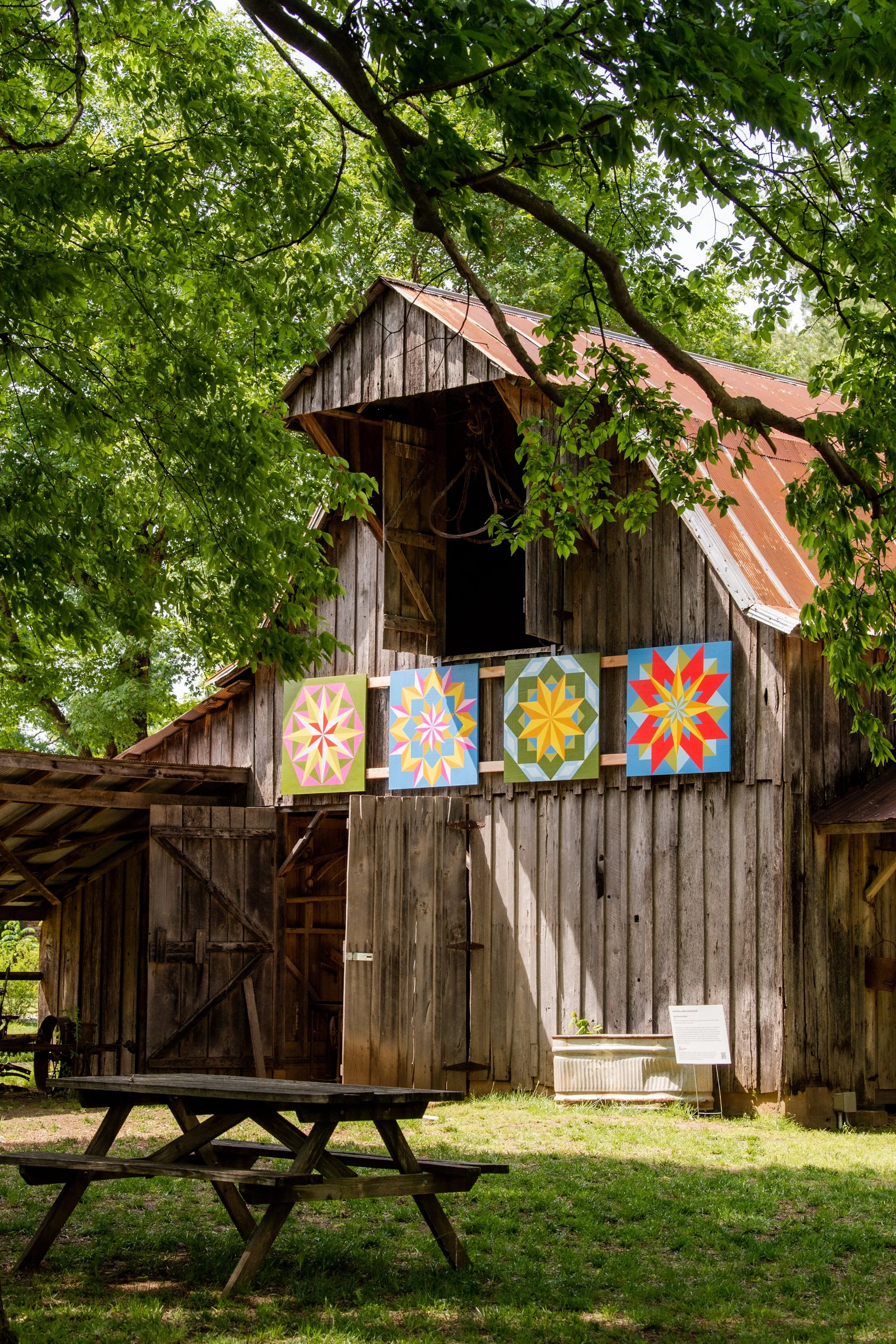
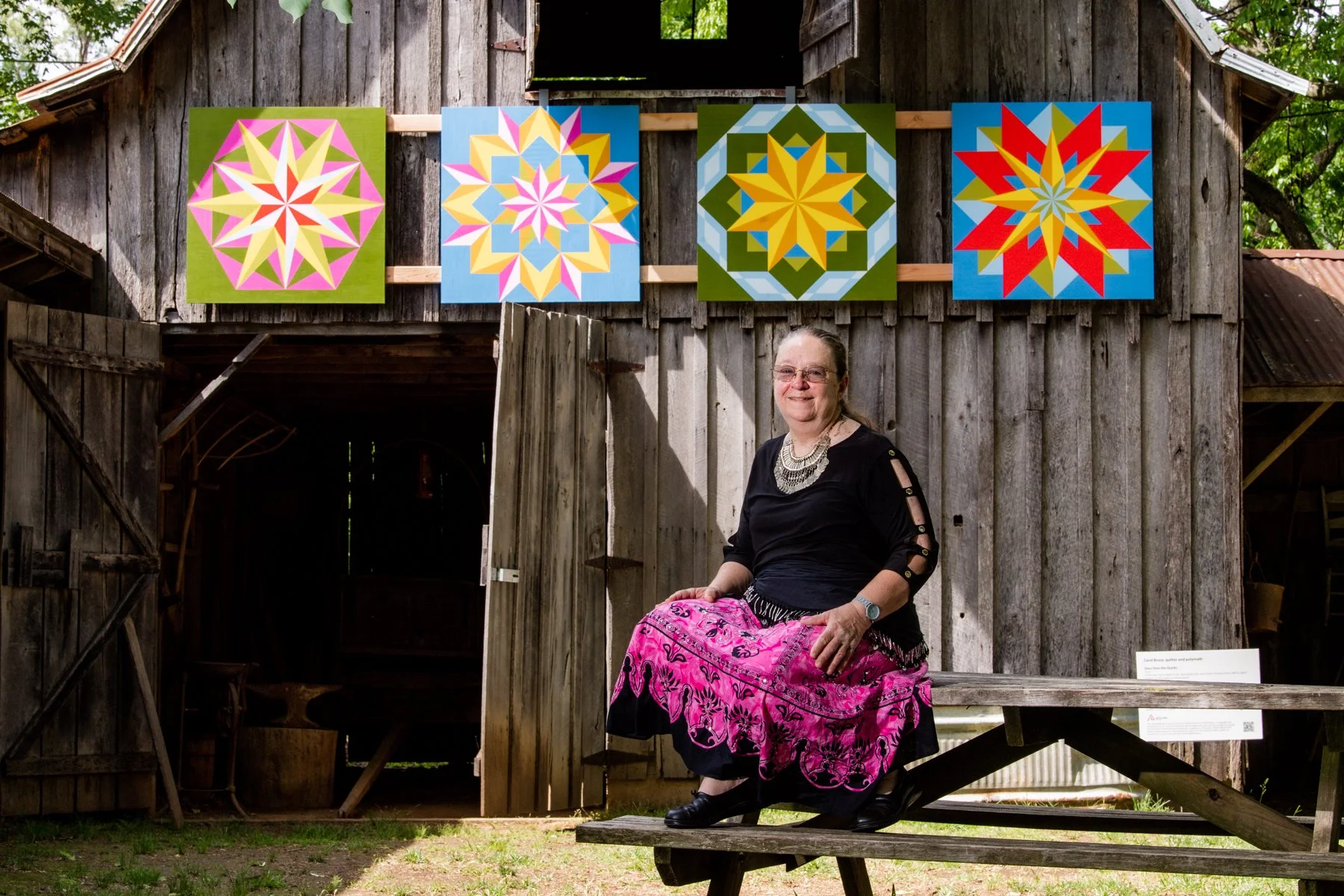
A reimagining of traditional star quilt patterns to celebrate the region’s past and our bright future.
Carol Bruce
STARS OVER THE OZARKS
To Carol Bruce, barn quilts are more than graphic designs and paint on wood; they are connections to family and community, evoking memories of nurturing and kindness, of quilts passed down through generations. Bruce is no stranger to quilts. Her closets are filled with heirloom treasures, art quilts using inventive techniques and magical figures, and samples from her twenty plus-year-old quilt pattern business. These four blocks are Bruce’s original designs derived from traditional blocks, with added inspiration from the colors of the Arkansas Ozarks and family quilters from the region.
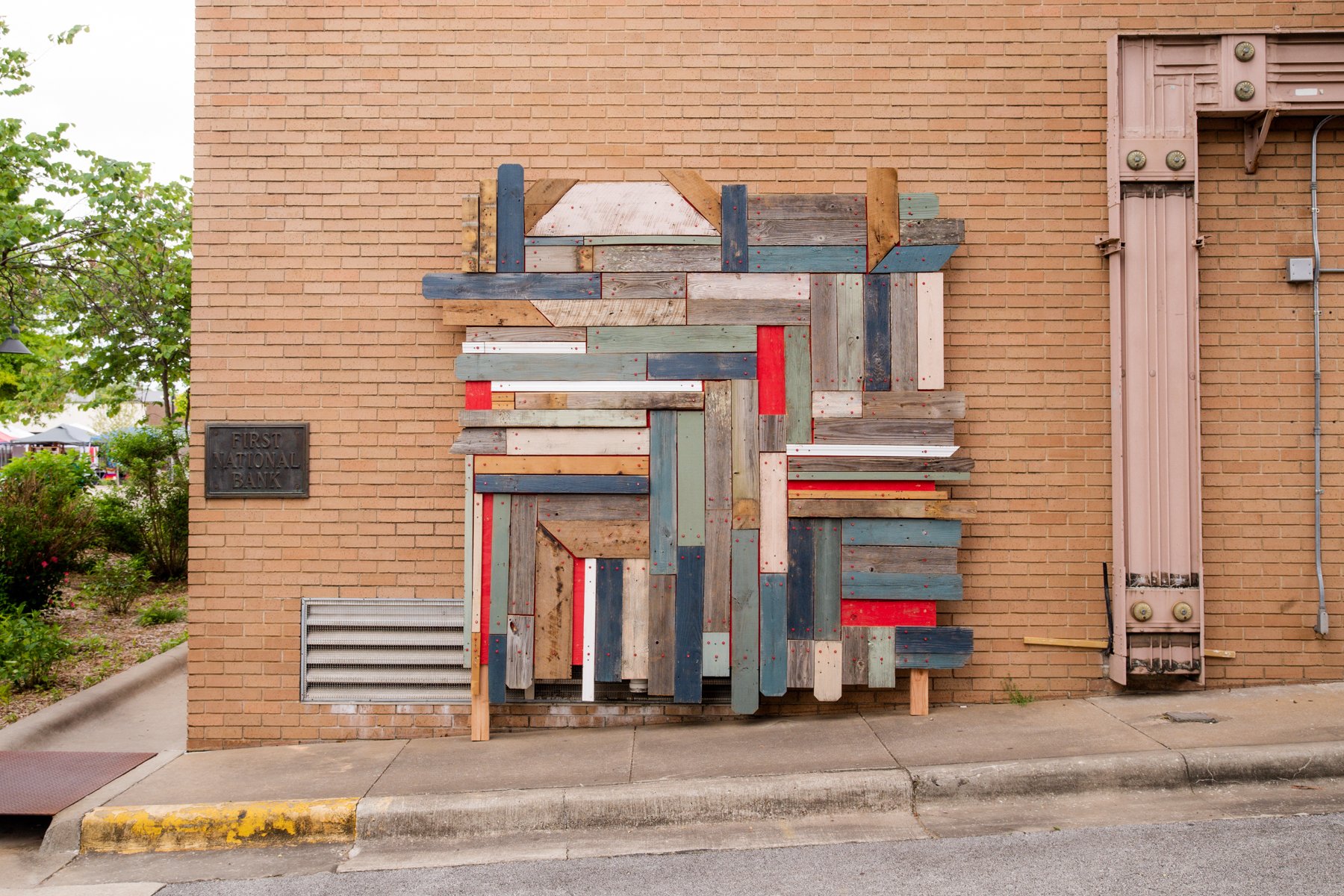
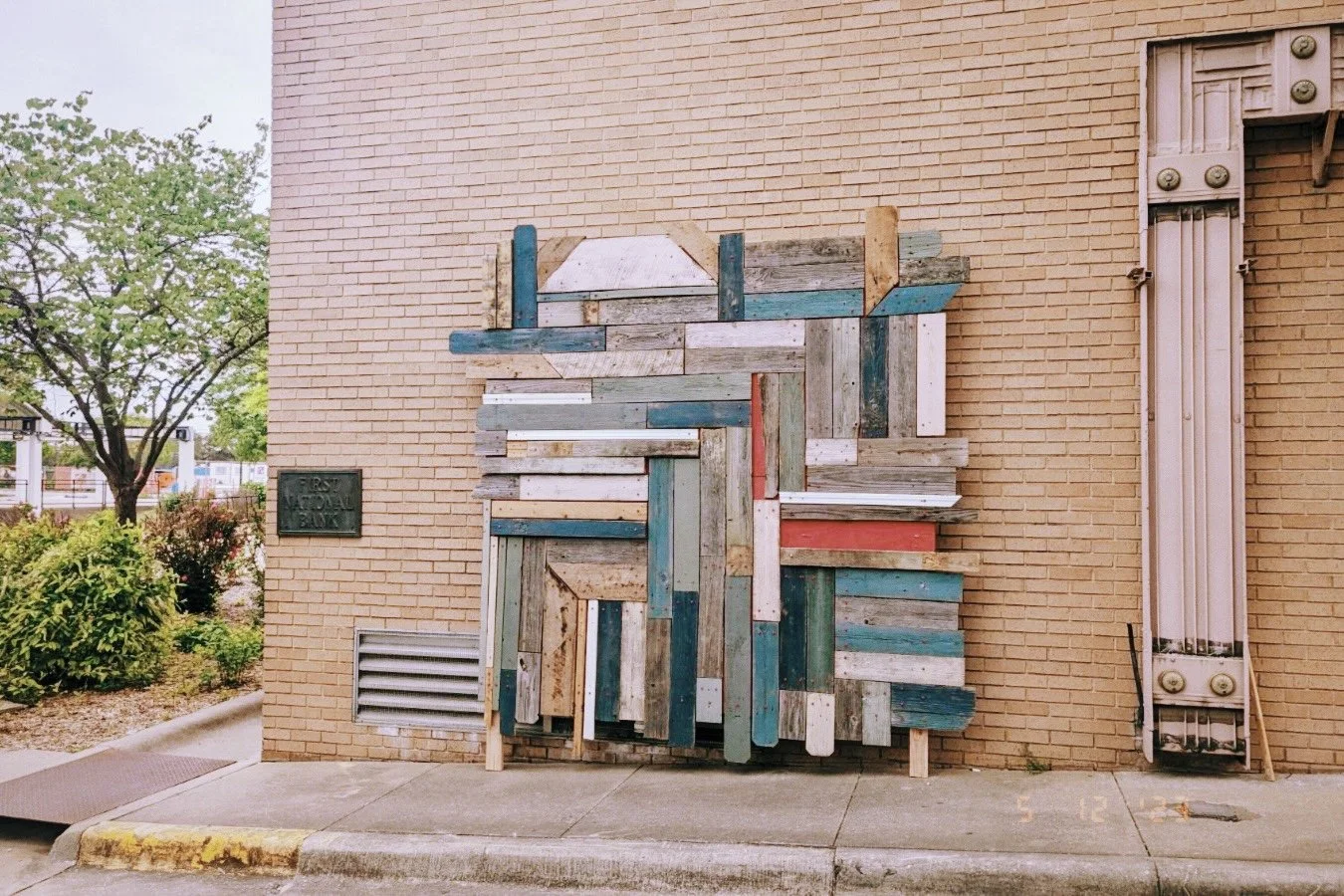
An homage to bringing new life to old materials in the Ozarks.
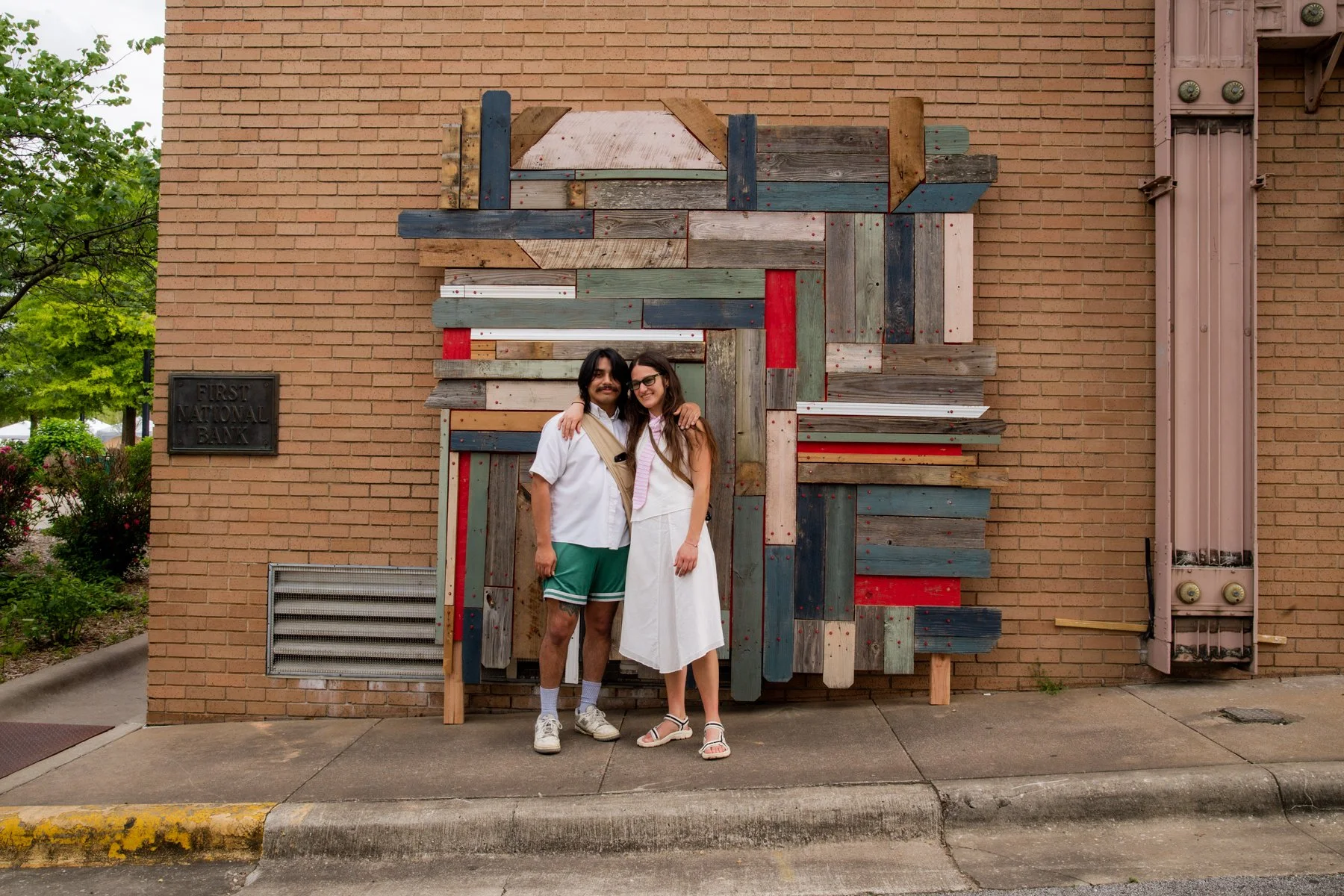
Abby Hollis and Bryce Arroyos
SWEET HOME
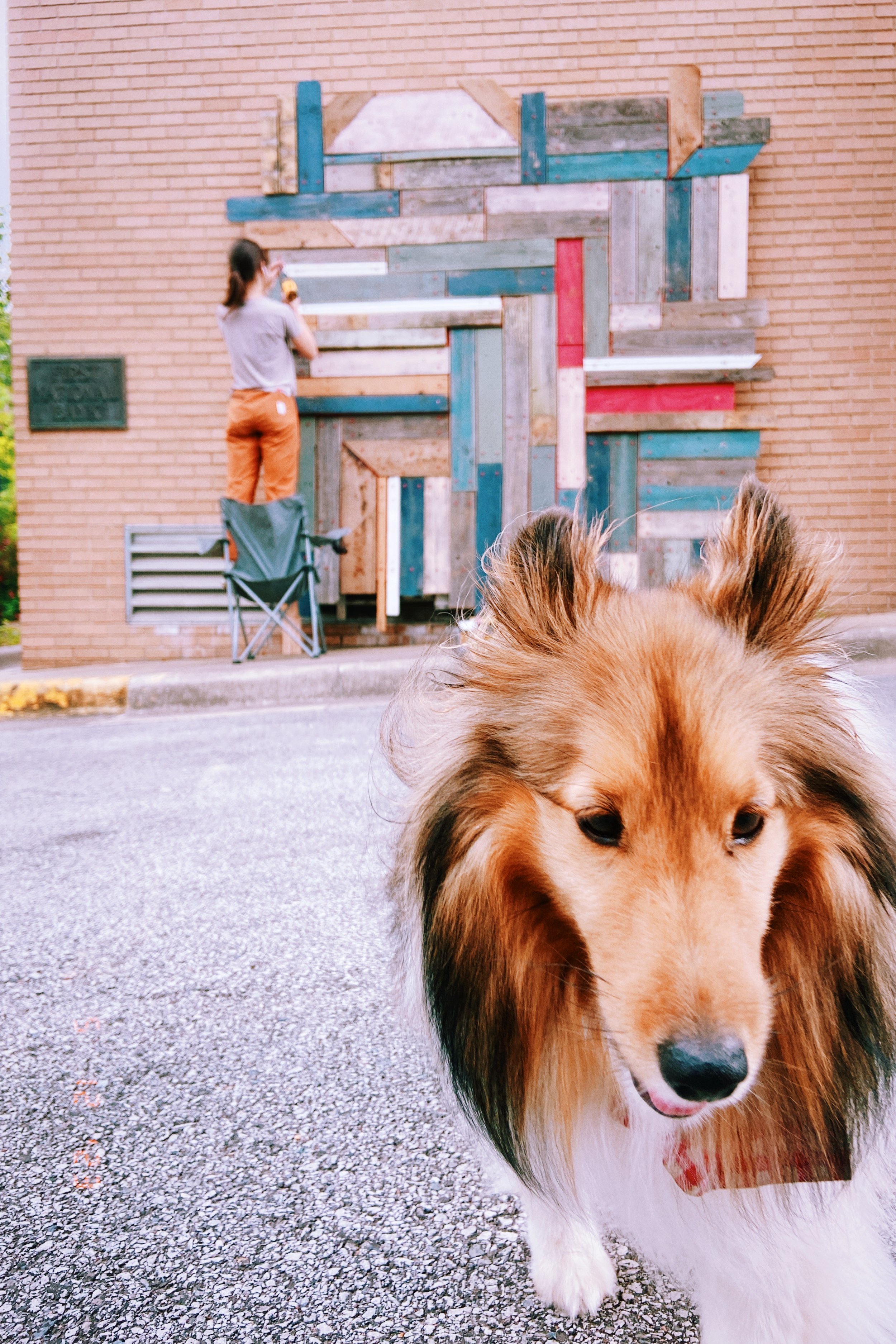
Abby Hollis and Bryce Arroyos center their craft practices on the history and origin of materials—from thrifted textiles to the Ozark hillside. Drawing on this shared approach, they created a barn quilt from found materials inspired by early twentieth-century crazy quilts. Red screws reference the traditional “tie” quilting method, where layers are bound with visible knots rather than stitched, emphasizing warmth, function, and process.
Arroyos, a fashion designer, transforms discarded textiles into garments shaped by their prior use, while Hollis, a spinner and weaver, works primarily with Ozark wool and advocates for local fiber systems through Ozark Fibershed. Sweet Home reflects this intersection of material, place, and making—telling a regional story through carefully sourced, altered, and assembled materials, and asserting that understanding origin deepens our connection to both product and place.
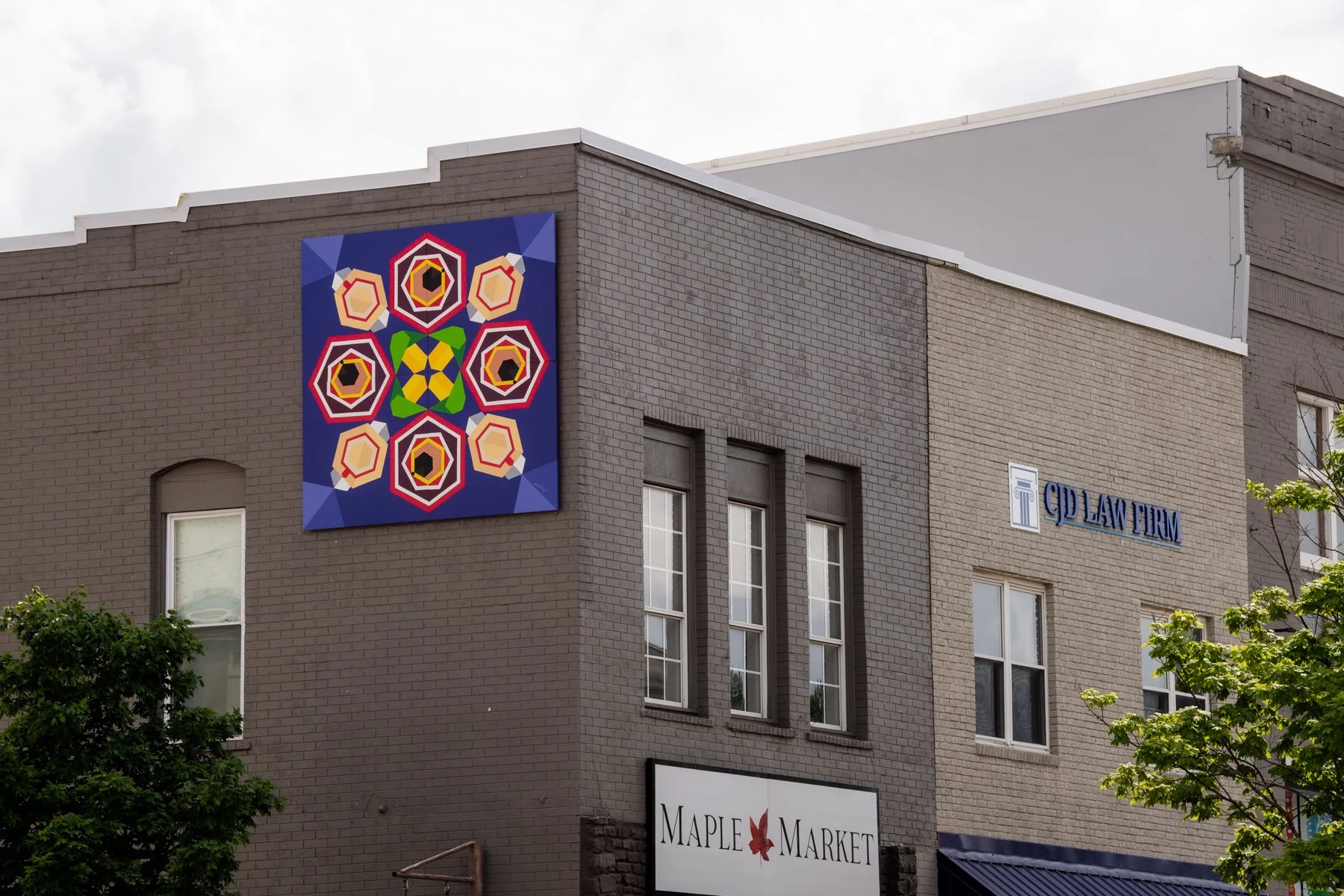
A celebration of Honduran folk traditions which inspire creation in today’s Ozarks.
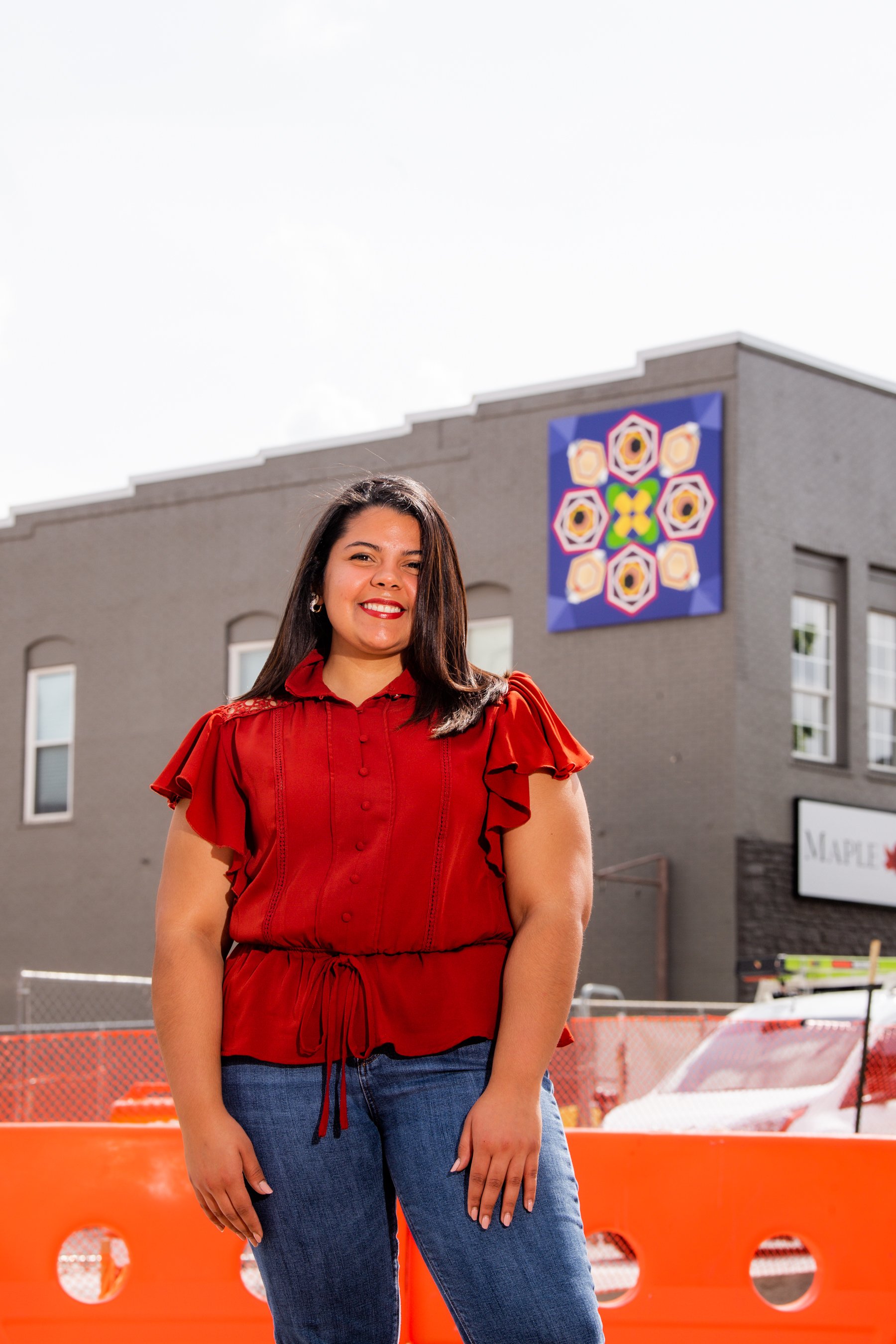
Azalia Molina
LA TUSA
Azalia Molina draws from Honduran folk traditions to depict La Tusa, a playful dance in which partners exchange a corn husk as a teasing gesture before reconciliation. Designed as an aerial view, the quilt’s geometric pattern represents dancers in motion—concentric shapes forming women’s swirling dresses and men’s traditional hats—visible from the street as a living choreography.
Rooted in Molina’s upbringing in folk dance, the work reflects the deep cultural significance of corn in Mesoamerican life while showcasing how traditional practices continue to shape her fine art practice across painting, ceramics, and murals in Northwest Arkansas.